Sunday, November 6, 2011

Rajasthan: Land of Sunsets

Once upon a time we were in India, and that was before we moved to Berlin and even before we had some short vacations of our vacations in Thailand...


Rajasthan state in western India

As I was telling a long time ago I found anoutside-of-the-Lonelyplanet-guidetrain combination to get to Shekhawati region from Delhi. We took seats (in fact beds) in an AC-3 car, as we always do, on the morning four-hour train to Loharu. We arrived there, and it felt we were the first non-Indian people to ever step on the station. We were stared and inspected and then stared some more. We bought some super spiced and super fried snacks outside the station where we received even more looks. Then we sat in the wooden seats of a small local train to Nawalgarh, one of the towns that belong to the Shekhwati region in north Rajasthan, and we gathered a small crowd that sat around us just to see the strange foreigners. We enjoyed a nice train ride through the desert, feeling the warm wind from the open windows while we heard a young guy playing and singing Rajasthani music.
As I told before, after more than one month traveling in India, Rajasthan was like our first taste of the real India


Nawalgarh and around, Shekhawati region, Rajasthan
Shekhawati region is famous for its havelis, and that's the reason we traveled there. Even though havelis are actually the name of the style of building developed by the Mughals in the 16th century -many small windows, many rooms and distinctive arches-, in fact, people call havelis to both Mughals and British mansions that are filled with frescoes on every centimeter. The frescoes depict traditional themes such as images of gods or sacred animals together with modern inventions and scenes from the British colonization. Many of them are in a sad state of disrepair on buildings falling apart, but still they are worth a look.


Dr. Ramanath A. Podar Haveli Museum in Nawalgarh is a mansion with one of the few examples of very well conserved frescoes. On the inner walls of the patio, over images of Rama and Krishna a long train depicted together with the traditional themes of Hindu mythology caught our attention as soon as the curator of the museum (I think he was the curator) pointed at it.
The very well-educated Brahminhe kept remarking that he was a Brahmin, the highest caste in the “inexistentcaste system of India- explained us that the frescoes were like a TV for the house residents. By the time the frescoes were painted, people from Shekhawati hadnt seen a train, so the house owner sent the artist to Bombay to see this new invention and asked to have it depicted on the walls of his patio.

We were the only foreigner faces in Nawalgarh and we gained a bit too much attention from the locals. Luckily, we found a small gem a bit outside the busy center of the town, the quiet and cozy D.S. Bungalow. It was supposed to be a guest-house, but it was more of a home-stay. They made us enter from a small field behind the house, because the entrance was still closedI suppose we were the first tourists from the season- and they did their best to make us feel comfortable. We stayed there two nights; and the couple that runs the place, Pinky and her husband Bunty, were great hosts. They talked with us without a secret agenda of selling tours, camels, bikes or anything. We arrived at the first night of Navarathri holidays and Pinky even took us with her and her children to the place of the prayers.
Navaratri is a nine day festivity which celebrates the Mother Goddess Durga. People more or less fast during the nine days but they take candies after the prayers and they invite dinner nine girls from the family which represent the different incarnations of the goddess.
We were led by Pinky to an open space but men were separated from women and children by a fence. So I ended up alone and I just stayed as far from the crowd as possible. I didnt stay alone much time, suddenly 20 young men and boys were staring at me and asking me questions non-stop.

Surrounded!

The staying at Pinky and Bunty's place was surprisingly relaxing. Pinky made us incredible good food and she even prepared mutton even though most people fast or eat only vegetarian during these holidays. And on our second evening we hanged out with them and their kids until very late: Iohi taught Pinky how to make jam and they prepared it with pineapple and guava and later their elder girl made a henna tattoo for Iohi (for free). While she was getting her henna tattoo done, Bunty whispered in secrecy if I wanted whiskey and filled me two glasses (without taking a cent for it).


From Nawalgarh we took local buses and visited two nearby towns Mandawa and Dundlod. Little polyglot touts drove us crazy in Mandawa trying to sell us stuff or led us to their shops. Running away from these little touts led us to small alleys with lots of havelis with beautiful -but deteriorated- frescoes. From Mandawa, we traveled to the much smaller Dundlod. We saw a few more frescoes and we rested at the café of a bizarre fort hotel.
On the third day, we just took local buses the whole day: from Nawalgarh to Sikar, from Sikar to Ajmer and from Ajmer, finally to Pushkar.


Pushkar, Rajasthan
We arrived in Pushkar at late afternoon, just in time to see a magnificent sunset from the roof of our hotel: a violet sky, all the buildings turning different shades of gold and the tiny lake surrounded by ghats becoming a silver plate.
Pushkar is an important Hindu pilgrimage town and religious people have to visit the town once in their life. The town is filled with Hindus visiting temples, doing pujas (Hindu prayers) and bathing at the ghats. Since its a holy city and Hinduism professes non aggression, which includes animal aggression, the town is strict vegetarian. In the Hindu sense, this means meat and eggs arent allowed but milk is. Alcohol is kind of a taboo among Indians and drinking alcohol is definitely a sacrilegious thing to do, so alcohol is also not sold there.


Together with the religious side of the town coexists a busy tourist scene: lots of guest-houses, souvenir/hippie clothes shops and the same crappy tourist food as we found in many other touristy places, i.e. Manali, Daramkot, Bagsu, etc. On the other hand, the town is more relaxed than many of those places: vendors are somehow quieter, and there arent autorickshaws! We werent still in the high season and many restaurants and guest-houses were quiet empty, so we might have got the impression of a quieter place than it really is
On our second day we caught our second incredible sunset on the top of a hill at the gates of the Savitri temple. In Pushkar, I also finished the development of a nose infection that made my nose beat and hurt each step I went up, on top of that half of my nose was even bigger than the other half!
And on our last day, we waited for the sunset at a café in front of the lake while hearing the sound of drums. On the same night we took a night bus to Udaipur. We quite enjoyed the city, but I guess not as much as people we met there who get all mystical and stay there for weeks... (and keep returning there every year or so).

Our night bus was plainly weird. We were asked before if we wanted a sleeper or seats, we bought sleeper tickets and I supposed that there were two busesBut there was one bus with around ten aquarium-like acrylic cells over two rows of seats with people hardly fitting without crouching. So we spent the night moving and jumping inside our little aquarium so much that we felt like fish fried wok style.

Udaipur, Rajasthan


The bus went so fast that we even got there one hour earlier. So at 5am we woke up the owner of Nukkad hotel. It was a big and interesting haveli style building where also the owners family lived and helped with the hotel chores.
The city was pretty much like Pushkar with tourist cafés and souvenir shops, but maybe not so packed with them in every place, and besides the city is bigger and fancier (and also less hippie and mystic). It even has a lake in the middle (but bigger than Pushkars lake). There are two hotel-islands on the lake, one of them we visited with a boat excursion and the other one is only accessible for guests and it was where some parts of James Bonds movie Octopussy from the 80s were filmed. To take the most of it, many restaurants project the movie daily (I supposed that for the last 30 years).
Looking at the Octopussy's hotel from the other hotel island

We had some nice surprises in the city. We went without high expectations to see folk dances at the Bagore-ki Haveli Museum and it ended to be an amazing show with incredible performances. Sometimes it seemed more like acrobatics in traditional clothes than dance with the highlight of the performance being a woman in her late 60s holding nine huge ceramic vases on top of her head.


We started our last day at the colorful and local fruit and vegetable market outside of the tourist area and we ate a thali at Nukkad hotel's owner favorite place. A thali is a big plate with many small dishes, rice, some of the Indian breads, sometimes pickles. At traditional places, the modality is as much as you can eat, the waiters serve and serve until either you drop or you leave the place. It's of no use to tell them that you don't want any more food. And traditional thalis are extremely spicy. Here some of the small dishes were spicier than others, but everything was very spicy, so much that my tongue went numb. I ate a whole portion of really spicy green chilies without realizing that they were chilies or even spicy! Then my portion was immediately refilled and I ate another bunch. Only then when I was about to pass out I realized how spicy it was.
At the market
The deadly thali

We spend our last day walking around the city and we caught our last grandiose sunset on Hanuman ghat, at the other side of the lake, which was pretty much like our side.


On that same night we took a train to Gujarat state and after being kind of stuck in Baroda for a day we took another night train to Bhuj, the capital of Kutch district, but that's the next post...

And all the truly amazing pictures that Iohi took are here

Monday, October 10, 2011

India: From Little Tibet through Little Israel to Delhi

We’re now almost leaving India and in our last days in Bombai. We traveled south through the beautiful desert areas of Rajasthan and Gujarat, where we felt, after more than a month traveling in India, that we finally arrived in India. But first we had to get there through places that were imagined abroad and brought ready-made to India…

Upper Dharamshala, also known as McLeod Ganj, also known as Little Lhasa and also known as where the Dalai Lama lives…
I knew that the ride from Manali was going to be tough, up and down and round and round. And this time I took some motion-sickness pills. So I got completely stoned and slept the whole way.
Quickly after we arrived in McLeod Ganj, we found Iohi’s sister with her friend on the main street of the town.
McLeod Ganj is the paradise of bored Europeans or people from the US that want to save the Tibet. You have where the Dalai Lama lives and his  monastery,and there are many activities and volunteering related to Tibet; and of course the “Save the Tibet” and Dalai Lama memorabilia. If you check the wiki travel page of the Dharamshala, you have a whole section with excruciating details explaining how to force a meeting with the Dalai Lama, “the dream of a lifetime for many people”. I have nothing against Tibetans or Tibetan Buddhist, but it’s a bit over the top. It’s just fashionable to “Save the Tibet”, when in fact they are not having such a bad time in India. If you go to Calcutta or many places in the West Bengal and Bihar states, you’ll see poverty beyond your imagination, Indian people without food, living and dying on the streets. But I guess they are in a really tough situation and it’s nicer to volunteer with healthy people and in a place with nice view.
And it has nothing to do with Tibetan’s autonomy, it’s true, they deserve an autonomous country, and they have been oppressed by the Chinese government. But who in China hasn’t been oppressed, intellectuals, artists, Falung Gong, ethnic minorities, homosexuals, you name it, it has been oppressed. And I haven’t meet Europeans trying to save the Uighurs and give autonomy to China's Xinjiang Region, and they deserve it as much as Tibetans. Well, of course, Buddhism is still more fashionable than Islam…

Tsuglagkhang Complex, Dalai Lama's monastery

At the Dalai Lama's monastery

From McLeod Ganj we moved to a quieter and smaller town just above it, Daramkot. It’s a backpackers bubble without all the Tibetan paraphernalia, but not so different from Manali: lots of Israelis, charas and tourist food, on the brighter side it’s less crowded with shops and people, and you can see the green mountains from the whole town. 

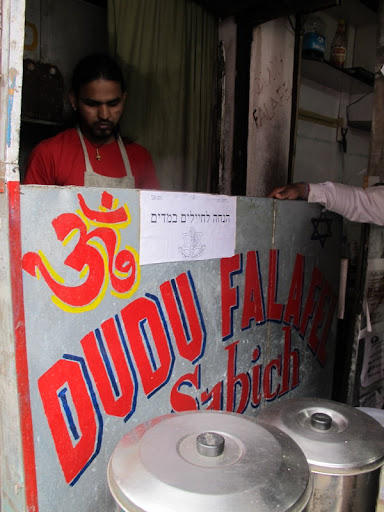
On our last day we walked from Daramkot to McLeod Ganj through another backpacker town: Bagsu. Bagsu is pretty much Little Israel. If you take South Tel Aviv neighborhoods and you put them in a slope you’ll get Bagsu. You have signs in Hebrew, falafel, Israeli shanty-hippy style clothes, people selling and making stuff completely unrelated to India but that the Israeli shanty-hippy community loves such as Australian didgeridoos and Jamaican dreadlocks. And of course you’ll find people that got stuck there for weeks and can think that Tibet is in Goa, complain that they can’t find the traditional chai as they drank it in Israel or look at a trash bin and say “this is magical”. This is India as Israelis want India to be, just as they imagined it from home, and Indians built it for them.

If you're shocked, read what the swastika really means

And the thing is I love Tel Aviv and specially the artsy South Tel Aviv neighborhoods, I also like very much falafels and I even find didgeridoos quite cool (and I have nothing against dreadlocks). But I love South Tel Aviv inside Tel Aviv inside Israel, not its bizarre image in India (and by the way I plainly think it’s quite stupid to travel to India to learn how to make a didgeridoo, especially when you have to carry the rest of the trip an excessively large and heavy piece of wood)
While we waited to aboard the bus back to Delhi we talked with a Hindu girl from Delhi who traveled to Tushita (near Dharamshala) to do some kind of retire with a Buddhism workshop. She told us that half of the people also there were Israeli and she even told us the well-known joke about Israelis in India:
An Indian guy asks an Israeli tourist how many people are in Israel. The Israeli answers 6 millions. The Indian guy replies: “No, not how many Israelis are in India, how many in Israel!?”

Delhi
After a smooth bus travel we woke up again in Delhi. We stayed in the same place as last time on the extremely noisy Main Bazaar street. We spent only one day there and most of it went by trying to get information about how the hell we travel to Shekhawati region in Rajasthan. Shekhawati region is at the northern part of Rajasthan state and Rajasthan is at the south of Delhi. So we supposed it should be easy to get there. However, it’s a bit out of the beaten track and most of the transportation goes to more famous spots like Jaipur, Jodhpur, Udaipur, etc.
We went to the Governmental Tourist Information, to a private travel agency and to the Rajasthan Tourism Development Corp. and they kept saying that they don’t know or gave us information that proved it wrong. After a whole day walking and riding autorickshaws from station to station we almost gave up.
We went back to the hotel and I did what I know how to do: I looked in Internet. I think that by this point I should get a degree in Internet Searching. Anyway, I found a strange combination taking reserved seats in the AC three tier coach of the train to Loharu. Then we had to wait for 40 minutes and take unreserved seats in a local smaller train to Nawalgarh. It was quite easy and a nice ride; and even locals from Shekhawati were a bit shocked that we managed to arrive from Delhi (and not from Jaipur) but that’s another story.
When we finally sorted out the transportation issue, it was already evening. We decided to at least take a quick glimpse at Old Delhi. We managed only to see the Red Fort from outside and we started to walk through the open market just before it began to close. It was a complete chaos and there was a traffic jam, a bike congestion and even a people congestion. If you’ve ever been to an open market on the closing time, you know it’s pretty busy. But this was as if on top of the closing market, some shops had decided suddenly to swap places, and then also most of the neighbors from the buildings over the market decided it was their moving-day. And to that, you can add maybe two demonstrations going into opposite directions. Ah, of course add many cows to the picture. But this wasn’t the case, it just looked as if all this was happening, and actually it was the regular closing time of the market…

Friday, October 7, 2011

More of north India: Four day trek in the Spiti Valley


Spiti ValleyIf they look like Tibetans, speak Tibetan, they aren’t necessarily Tibetans.

So we were in Manali, at the end of the tourist season, and we couldn’t find more people to share a jeep to Spiti Valley. So we took the 6am local bus and traveled for 10 hours. It was one of those buses that sometimes you see in pictures of India with people hanging from the doors and people seating on the roof… But it was rather empty and since the bus stopped at every town and village, some people even got down at the beginning of the journey. We ended taking 3 seats each and sleeping most of the drive.
Local bus
On the other side of the green mountains around Manali, we found a pretty impressive desert mountain valley right before Tibet. It had Tibetan mud houses inhabited by people who look just like Tibetans, speak a language that sound just like Tibetan, practice Tibetan Buddhism and eat momos and thukpa. But they aren’t Tibetans, they are Spitians. They are indigenous from the region, and they happen to be the guys that ended up living in the Indian side of the border (before there were any borders). The main difference from the Tibetans (at least from the Tibetans that live in China outside the Tibet(an Autonomous Region), that is, the Tibetans that we met) is that they are way more focused on agriculture than livestock and they are somewhat influenced by Indians food and clothes. We had plenty of different experiences with the Tibetan people (check all the Tibetan posts), but it’s not that we are so much into Tibetan culture, or that we are trying to stare at the Tibet from every cardinal point. We didn’t have the best of the experiences in, say, Qinghai province in China, and I even got into a quarrel with a Tibetan monk on our way back from Spiti. But these people happen to live in the highest and most beautiful mountains where the heat of the summer is converted in breeze and bright sun during the day and chilled nights. And we liked that. And I have to say that many of the Spitians made great hosts (and many speak a great English).
So let’s go back to the story, we arrived in Kaza at 3800 m above the see level. It’s a small and dusty place with ugly concrete buildings but it’s the main town and commercial center of the valley. Besides that, it’s tourist friendly and it has many guesthouses and tourist restaurants (not that this is a good thing) and even though there’s no phone signal in most of the valley, there are internet and call centers. We wanted to start a four day trek in a near village, but we were informed in a very helpful travel agency that local transportation only got there twice a week –the day after the following day. Then we went to the headquarters of ecosphere, a great initiative from three NGOs (MUSE, SSS and STAG), that promotes sustainable livelihoods and eco tourism, between other things. They are the guys that trained the people of the really tiny villages to receive foreigner tourists and provide them a “home-stay”. They also put signs explaining either about the villages, or about the solar panels they installed and even how to use a dry-ecological toilet. There we got some more information and recommendations for our trek from Komic to Dankhar going through Demul and Lhalung.
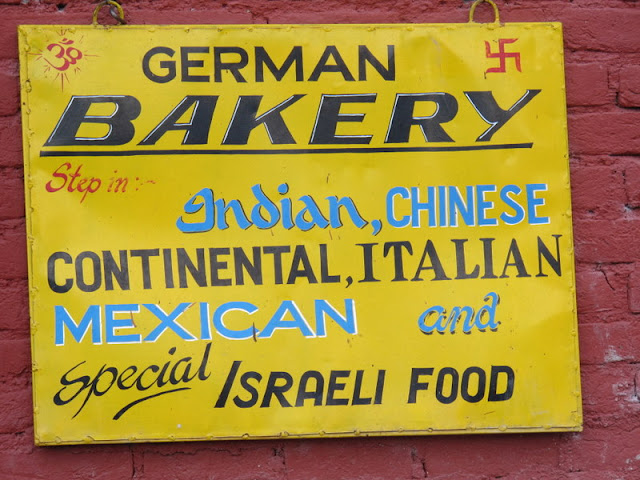
Then we sat at the only bakery. (It was of course a “German bakery”, who knows why they call the Western bakeries that way). We found ourselves surrounded by Israelis and an Iranian Jew who was angry that everyone was speaking Hebrew and he couldn’t understand. In fact, some of the Israelis were complaining –in Hebrew- that they kept finding Israelis and that it didn’t feel like traveling abroad. An Israeli couple got interested in our four day trek and wanted to join us; and two after-army Israelis (which were unlike the ones we met before in Manali –see the previous post) offered us to join them in a one day jeep excursion to the villages of Ki and Kiber the following day.
So at midday of the following day, the two friends, another Israeli couple that they met on the way and we traveled by jeep first to Kibber and on the way back to Ki.
Kiber is a very small village with around 80 houses and an old gompa (Tibetan monastery); it’s only 16 kms far from Kaza but 300 meters above it. We wandered around, saw the monastery and sat in the local restaurant/guesthouse. Ki is an even smaller village with a huge monastery. We were invited in by a very talkative and cheerful monk who explained us a little about the monastery and showed us the room where Dalai Lama once slept. He laughed all the time and from time to time he talked Gibberish-Hebrew. After the small tour and an optional donation, which he really earned, he offered us tea and tsampa (balls of roasted barley flour) and tried to learn his words of the day. He took a brochure from some NGO and asked us about the meaning of indigenous, provide, support and autonomous.

Ki Gompa
On the way back to Kaza, the four guys asked us about our four day trek and decided also to join us.
So the following day we were supposed to be us and other six people starting the trek. We ran into the first couple (from the bakery) on the (only) street and they said some lame excuse about why they’re not coming. That left us six people. The second couple came to the bus stop to say that they aren’t feeling well; the girl developed altitude sickness during the night and hardly slept. That left us four people: us, and Adam and Omer -the two post-army friends


From Komic to Dankhar


So we took the local bus around 2 pm and we arrived in our first stop, Komic (4500 m), one hour and a half later and around 800 meters higher! We were received by Kunga and his great family in their mud house and gave us a room in the upper floor with an amazing view. After seeing the stuffed tiger on the entrance of the local temple and its interior (well, not all of us, Iohi couldn’t enter because the entrance is forbidden for women – I suspect this is because the image of guy biting the ass of other guy), we went back to our home-stay. Kunga prepared Indian food: dal, vegetable curry, rice, pickles and chapattis and answer all our questions about Spitians and Spiti Valley. We learned that the workers that were building more mud houses outside were actually Nepalese immigrant workers! Who could imagine that farmers living in mud houses had workers doing their hard work! During the night Adam and Omer hardly slept and started to go one by one all the symptoms of altitude sickness. We were supposed to walk up to 200 meters higher before going down to Demul at 4300 m above the sea level, so they decided to quit and return to Kaza by jeep. That left us: the two of us trekking alone.


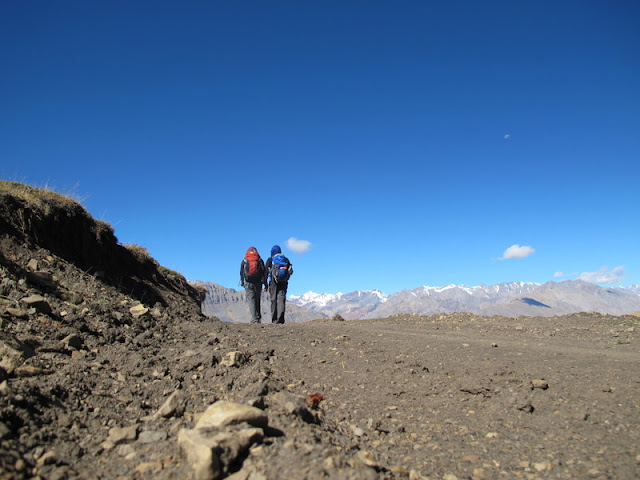
So after having breakfast and having Kunga’s wife put a lot of rice in our lunch box, we started to follow up a jeepable road under the bright sun of 4000+ altitude. We were alone most of the time walking up on a moon-like landscape and we only saw far away some shepherds. At that height walking with our bags, water and food was a pretty hard task, but eventually we found some Spitians on motorbikes that point us that the trail to Demul went up from the jeep path across the mountain. Then every step was an excruciating task, we had headaches on and off and even breathing was tough. After 4 hours we were thrilled to see the Tibetan prayer flags that marked the highest point of the trail: 4700 m above sea level.


From there it was a nice and relieving walk down. After one hour or less we started to sea the terraces with plantations of barley, potatoes and wheat, and the people working the land with yaks. Soon we arrived at Demul (~4300m), mud houses on a steeped slope and everyone, men and women, was singing and working. We still don’t understand what they did; they were moving, splitting and all sort of stuff with dried straws.

Demul
  We were led to a home stay by guy in his forties or maybe fifties, it was hard to tell. The situation was a little ambivalent, they were by far the most apathetic family of the trek, but the same night they held some kind of party there so we had the chance to glance at a tipical Spitian celebration and to taste the goodies: some kind of barley spirit which tasted between vodka and whisky, steamed sheep blood sausages that were exquisite, and very tasty recently made mutton meat momos.

Inside the homestay

On the following morning, we headed to what supposed to be the shorter trekking day –4 or 5 hours. So we started an extremely stepped walk down the valley; in less than 2 hours we descended around 1000 meters! First we went down a river until we reached a village of five mud houses called Sanglung. We had there some nice trees to have our lunch (box) and then we peeked in a house until we were invited to have some chai with the local family. We asked regarding our next destination, Lhalung, and the guy from the family did a single hand-movement that pointed down towards the river bank and then west. We were a little puzzled, our printed instructions (from 2008) indicated that the path goes east and then down the river to cross a bridge and then up again to reach Lhalung.
So we went down till almost the river and asked again to a group of workers who pointed east (like our printed instructions). Since we didn’t want to walk up again to the trail, we went off the path and walked over the river bank towards the east. We supposed that we’ll eventually find the bridge right there over the water…
So we walked and walked off the path over the stones and mud on the northern shore of the river for hours. Suddenly we had Lhalung up the hill in front of us, and on the other side of the river. But the thing was, there was no bridge…
We considered many times to cross the river but we weren’t sure how dangerous that could be. So we walked again up and down the river looking for a quieter spot, but the current seemed pretty strong everywhere. The idea of crossing the water vanished when Iohi put a toe in the freezing cold water and we decided just to go back.
Lhalung and below the river we wanted to cross

So we walked to the west all the way back to Sanglung and then continued until we finally saw a bridge. We crossed it and we walked again to the east, this time on the right side of the river. So after 9 hours walking, and just before the sunset, we entered in Lhalung (~3700 m). This little village in the middle of nothing had several home stays, even with signs. We opted for Khabric Guesthouse, where we collapsed on the kitchen floor and drank tea until the evening. We were hosted by the magnificent Tashi and his family, and he explained us that the bridge we were looking for on the east was washed away with the last rains.
Iohi had the chance to master her technique in momo making by helping with the dough together with Tashi’s little girl and we enjoyed of Tashi’s family’s company.

Iohi mastering the momo making technique with Tashi's
daughter

On the morning we walked four and half hours to Dankhar (~3800 m). Dankhar is the most touristic town of that area, but we found it the least interesting. It’s nice when you see it from far, the monasteries and the fort on the steeped mountain over a precipice. But when you get there, it’s only OK. Every other village on our way was much nicer and interesting.

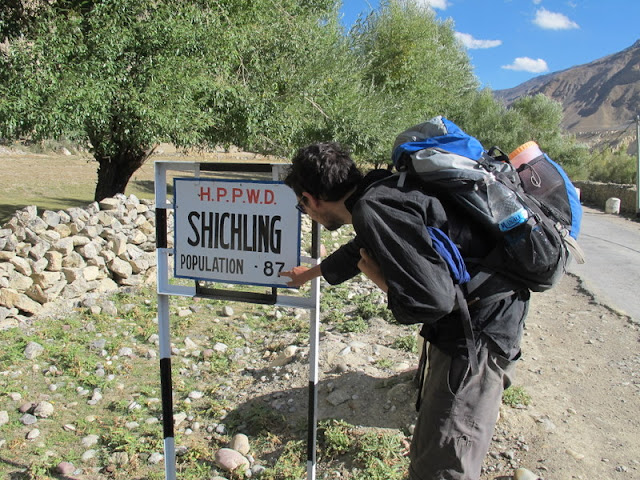
Shichling village below of Dankhar, on our way to the bus stop


Back to Kaza, back to Manali
So we traveled from Kaza to Manali again by local bus. But this time the drive was a nightmare, the bus was very crowded, when 2 people got down, 5 got in. I even got in a quarrel with a Tibetan monk because of Iohi’s seat. I ended up on the back part of the bus with more people than seats breathing all the dust that entered from the open windows.
We stayed for a day in Manali, and then we traveled to Dharamshala to meet Iohi’s sister, Sachu.
On the following morning, we took a minibus to Upper Dharamshala, also known as McLeod Ganj, and also known as where the Dalai Lama lives…

Pictures of Spiti in Iohi's picasa

Thursday, September 29, 2011

Going to North India and finding ourselves back in Israel?

Rishikesh – arouse your chakras, baby
So we traveled 5 hours in a very nice air conditioned train and we reached Haridwar, in Uttarakhand state, on the foothills of the Himalaya in northern India. The city is by itself an important pilgrimage city for Hindus little, but a little too hectic stop for us on our way to Rishikesh. So we took a one-hour local bus and a 20-minutes autorickshaw and we arrived in Rishikesh, the former retreat city for the Beatles and the first Israeli colony in the north. To give an idea of the amounts of Israelis, think that we witnessed Israeli people seeing friends from school by chance. In my case, I ran into my brother’s (Israeli) ex-girlfriend on the street!
 Every restaurant has virtually the same menu that presents first of all Indian food, but also Israeli dishes like humus, tahini, shakshuka, fatut and even ethnic Israeli food that I’ve never eaten like ziva. Those menus also include the classic Indian distortions of Chinese, Italian and Mexican dishes.
The tourist area spreads on both sides of the Ganges river around Lakshman Jhula street and on the High Bank (also called the Swiss Cottage); in those areas you’ll certainly hear Hebrew and see the local fauna: after-army-smoking-charas Israelis (for the sake of the truth I have to say that the ex doesn’t get into this category) that spend days (or weeks) drinking chai in the local restaurants and doing the same thing: talking loudly about the army, of course, and smoking charas, of course.
Anyway, the scenery was interesting, the weather was slightly cooler and the city streets were slightly quieter: we didn’t have to put pieces of toilet paper in our ears as earplugs like we did in Varanasi and Delhi to bear the noise. In fact autorickshaws aren’t allowed in large parts of the Rishikesh.
Sikh people invaded by monkeys

We took antibiotics that we happened to have there (prescribed by my doctor-mother), and finally we started feeling better from our travelers-diarrhea. So we walked around, we saw the sad water falls and many monkeys. We also did our mii-pilgrimage to the now-closed Maharishi Mahesh Yogi's ashram, where the Beatles once got high and got inspired to do more beautiful music. I think it’s an exquisite building on the top of a quite park where sadhus (half naked guys who leave behind all material attachments) hang out and do what they excel in doing –nothing, but a mystical nothing. Sadly, the building is abandoned in the growing vegetation and even though it’s picturesque, it seems that soon will disappear into oblivion.
Sadhus doing nothing
Maharishi Mahesh Yogi's ashram
Rishikesh is a mostly vegetarian and an alcohol-free city and it supposed to be the “world capital of yoga”. Since we did yoga for the last two years, we thought it could be a good place to take some classes. We did a long walk visiting ashrams (roughly, yoga schools that provide accommodation, simple meals and of course yoga lessons) trying to find something adequate.
But they were either too serious, I mean, you had to register months in advance or you had to stay at least 2 weeks; or they were a joke: a regular hotel but with an ashram sign.
We visited the famous Parmarth Niketan Ashram at Swarg Ashram area; but the place was far from relaxing and inspiring retrospection. It was a very busy and loud place where we heard a long and loud speech in Hindi from speakers everywhere. There we met a Western girl who gave us a new-agey brochure of Trika yoga. But we resigned and preferred to try the yoga classes promoted by our hotel (which in fact was the same class promoted by every hotel in the Swiss Cottage) than going all the way to the lower bank to try that.
Iohi peeked at a class, the young teacher didn’t inspire us too much confidence but the following morning we participated anyway. It was a rather mechanical slow-paced hatha yoga class word-by-word and movement-by-movement exactly like the one she saw the previous day.  
We didn’t want to take classes there anymore and we decided to give a try to the Trika yoga, it included morning and afternoon yoga lessons and some evening discussion. So the following morning we did the 40 minute way to Swarg Ashram area and found the school. The teacher was called… Yuval! (if you didn’t get it, he was Israeli!). The class was ok, a little too much arouse your chakra stuff, and extremely slow-paced, but he was an interesting teacher. And in the shavasana state, the final relaxation, we were completely high (and only from the class).
The afternoon class was led by a Mexican girl, who didn’t even present herself. Her class took the meaning of mechanical to a whole new level: she seemed like a videotape (yes, DVDs are less mechanical than her). It was awful, she was completely disconnected from  what was happened in front of her, and, actually, she did the whole class with her eyes closed!
Afterwards, she gave a class about the do’s and don’ts of the way of the yogi. There she presented pearls of Hindi wisdom like: if you do yoga half a day and the other half you torture kittens you won’t achieve balance. Or more realistic examples such as: if you do yoga six hours a day and then you’re bad with your husband and you mistreat your children and you eat ice cream, you won’t achieve balance. She kept presenting very adequate and relevant choices like either eat ice cream or do yoga, until we couldn’t take it anymore and we left.

Shimla – the toy city
The following midday we took a train from Haridwar to Chandigarh, spent the night and then traveled one hour in a crowded local bus to Kalka. There we took the cutest narrow-gauge toy train to Shimla in Himachal Pradesh state. It was a cool trip, passing through more than one hundreed tunnels and lots of retro stations as the little train creeps up through the mountain.

The city is a hill station, a cute and clean city with British buildings and it’s filled with monkeys! It was the summer capital of British India; in fact the British ruled India most of the time from there since it was cooler than Calcutta. It’s a rather expensive city (for Indian standards), but the city is very clean (for any standards): it’s forbidden to litter, to smoke in the streets, to spit and to sell plastic bags. And this works. The no-cars policy for the tourist area and the fact we were in some kind of shoulder season make it a perfect spot for relaxing.


Sadly, as the train went up I started to develop the symptoms of flu and I got there completely feeling like shit from fever. And in the following days I got the whole package: diarrhea, cough, tiredness. I spent most of the time at bed.
Iohi (besides looking after me) went in one occasion uphill to see the Jakhu Temple, dedicated to the monkey-god Hanuman. The way was packed with monkeys that learned to ransom items for food. They specialize in glasses and phones, but the locals tell that once they even robbed a baby! When Iohi was near the temple, one of the monkeys jumped over her backpack and took a bag of chips. Then some minutes later another monkey jumped over her and took her glasses, and she had to exchange it for an apple! Locals told her to take them off because the monkeys will continue to harass her. So she went on without glasses hugging her backpack and got attached to a French group that seemed a better prey for the monkeys. She finally saw the blurred temple (but she couldn’t tell me if it was nice) and went back to the hotel.

Manali –where we finally got better
When I felt slightly better we took a night “deluxe” bus to Manali. The deluxe bus was a very old bus with more or less reclining seats, it went up and did turns and more turns and I got completely dizzy. Every time we managed to fall asleep, the bus stopped for like 30 minutes and all the lights were turned on!
So we got to the noisy new Manali and we could choose between two satellite towns: the small Old Manali or the smaller Vashisht. Since we were already out of season, we opted for Old Manali. We found ourselves again in a second Israeli outpost. Everything had a translation in Hebrew or some writing assuring to Israeli compatriots that the shop had the best sandwiches or the best cakes. The clothes shops there sell a variety of hippy-colorful-shanti-rastafari clothes that people in India don’t wear at all and are tailored for, guess what, Israelis. It was cold there and I bought a long sleeved t-shirt and the store-owner assured me that the cut was exactly as Israelis want.
Right outside Manali

Old Manali is even closer to the Himalayas than Rishikesh and Shimla and it’s located on green mountains with small rivers and waterfalls. The view from there should be beautiful, but there are so many shops, guesthouses, restaurants, tourist agencies which sell exactly the same that the view is completely buried.
This time Iohi got the same virus I had before with her round of fever, cough and diarrhea. We stayed for almost a week until we both recovered: I broke a record with 20 days diarrhea, I think I almost vanished.
When we felt completely ok we started to look for a trek around, and after so many days of inactivity we prepared ourselves with a couple of days of yoga. We found the only classes in a guesthouse up in a small hill where workers of the places presented us with utter respect the guru.
So for the next couple of days, we woke up early and climbed the mountain to meet our bearded yogi guru. And we prepared our recently healed bodies with super fast-paced hatha yoga!
We tried to do a trek by our own, but around Manali there are huge marihuana plantations. Marihuana farmers seem not to be the kindest type of person and we read everywhere that you shouldn’t trek without a guide. The thing is that tourist agencies force you to take a cohort of a guide, a cook, a helper for the cook, a guy to take care of the horses and a guy to help the guy who takes care of the horses! And they won’t let you go with less people! So it’s expensive and we found it rather stupid to have more helpers than trekkers.
A group of Spanish guys told us about Spiti Valley, a moon-like valley 6 hours from Manali, which supposed to be safe and easy. I found out about a home stay walking trail in some forums and we decided that it was the best option. On the next morning we headed that way in a local bus…


As always more photos in Iohi's picasa.

Wednesday, September 14, 2011

Sweating from Calcutta to Delhi


Kolkata
Our trip in India started in Kolkata, previously known as Calcutta. We were supposed to arrive at 1am at the international airport but our 2 hours flight was delayed for more than 2 hours. People we knew that have been to Kolkata frightened us so much about the city that we did our homework: we booked a very nice and expensive inn where we could arrive at 2am (although we actually arrived at 4:30am) and we previously found out that we could take a pre-paid taxi from the airport.
So we paid our taxi before we actually took it, we went with the ticket and we took the taxi to our Best Inn. We drove for around half an hour on huge empty lanes in the middle of the night, on a city that looked like a post-apocalyptic English city without survivors. We arrived to our Inn and we rang and rang the bell until the guy that was supposed to wait for us waked up and opened the huge metallic door. And of course, our pre-paid taxi driver made something up to ask for more money even though we had already paid.
Anyway, we arrived in peace and we had our night of sleep. On the morning (after a couple of hours) we were woke up by the guy that worked there. We managed to understand that we have to fill two strange forms where you specify how you eat your eggs or if you have the bread with butter or with honey.
Then I tried to communicate with the guy and understand where we eat the breakfast. So I started simplifying and breaking the English but still what he said doesn’t make any sense. I ask “You bring the breakfast or we go somewhere to eat the breakfast?” and he answers “Yes, yes, you bring the breakfast”.
So after breakfast we went outside to move to a more central area and then we were confronted for the first time with the poverty of Kolkata. With its English constructions falling apart and all the garbage and the crowded streets, our first impression of the city is reinforced; this was really how I imagine England after the apocalypses.


It’s poverty beyond our imagination and no matter that we heard a lot about the city; we were completely shocked. So many people developing their entire life on the sidewalk: begging, sleeping, cooking, eating, shitting there. The line between food stall, toilet, sidewalk and street is completely blurred and we walked avoiding stepping into a poll of urine, bumping into people or being run over by a car. The heat, never ending honks, the traffic and the crowds created a feeling of claustrophobia even in the open spaces which were crammed with open markets selling Chinese stuff.


We tried to visit some sights, we entered to the Victoria Memorial, and walked in B.B.D. Bagh but most of the time we tried to avoid the heat and the crowds, walking a few hundred meters took too long and was too tiring.
The Victoria Memorial

I had my birthday in Kolkata!


After a couple of days we took a night train to Bodhgaya.


Bodhgaya
Bodhgaya is the place where the Prince Siddhartha sat under a tree, obtained Enlightenment and became Buddha. You can see there an offspring of the original Bodhi Tree and an interesting temple that was build close to the tree. But since it’s one of the most important places for Buddhists, there are pilgrims from all around the world and there are temples of virtually every kind of Buddhism in the world.
Because of the pilgrims, the town has also a myriad of stalls selling Buddhist souvenirs and clothes and of course an army of beggars.

A beggar at the entrance of Mahabodhi Temple


We stayed two days, having a pleasant and relaxed time there. And then we moved to the main town, Gaya, where we had to take an early train. The way to travel from Gaya to Bodhgaya is with autorickshaw: a kind of motorcycle with a closed space for two or three passengers but that actually transports an unlimited number of people. Once you’re in and you’ve arranged a price, you have to start fighting with the driver to actually get to the place you said. The driver may want to drop you as soon as possible but he might be a tout as well and might have in his agenda to leave you at the place he receives a commission.
The problem is that there are too many places with almost the same name. If, say, Raj Hotel enters in some guidebooks, you’ll see popping up like mushrooms: New Raj Hotel, Raj Guesthouse, The Raj Hotel, First Raj Hotel, and every other variation on every corner.
When we were in Gaya, we asked for the Vishnu International, and we found ourselves in front of Vishnu Resthouse. We managed to get to the right Vishnu but the driver tried to ask for more money claiming that it was our fault.

On the following morning we waited our 4-hours-train to Varanasi that was 7 hours late…


Varanasi

So we arrived late evening instead of at midday. Varanasi is situated on the banks of the river Ganges and it’s one of the holiest cities for the Hindus. They believe that bathing in the Ganges frees from sins and that dying there ensures release of a person's soul from the cycle of its transmigrations. So all kind of ceremonies, including bathing and cremations are conducted on the ghats: kind of open spaces with steps that sink in the Ganges.


So as soon as we arrived at the guesthouse, we got a nice map and explanations from Rahul, the owner of the place. However, instead of walking around and see the ceremonies at the ghats, I stayed in bed for 2 days with fever and a terrible diarrhea.
On the meanwhile Iohi walked the city, entered to Kashi Vishwanath Temple or the Golden Temple and attended to an evening ceremony in Manikarnika Ghat. Then she tried to go the Brown Bread Bakery, a bakery that supports a local school and where you can volunteer to help in that school. And it’s the number 2 of the things to do in Varanasi according to Lonely Planet site. But, there are two Brown Bread Bakery one in front of the other, like the place and its reflection. It’s just that you don’t know which one is the real one. And they both claim they are the real thing. Iohi even checked the schools that they support; each one has a different school! Later, she heard the story: the owner of the original bakery had some problems with the place he was renting, so he decided to move the bakery. Then the guy who had the property decided not to remove even the sign and maintain the Brown Bread Bakery exactly as it was creating two places with the same name and blurring the copy from the original.  

Next day when I more or less came back to life, I visited the Golden Temple. I had to pass a strict security check to go inside, where I was asked about Israel and its relations with the Philippines! The guard was completely puzzled when I told him that I had no idea. I thought maybe the Indians have some issues with the Philippines and I didn’t want to screw it up and being kicked out of the temple. Anyway when he started talking about the Muslims I understood he was referring to Palestine.
I still wasn’t feeling so good so we spent some hours seeing the city on a cycle-rickshaw. The advantage is that when you’re on a rickshaw they can’t drive you crazy about taking a rickshaw!


Agra
Later we took the short four-hour train to Agra.
We stayed for only one day: we saw the famous Taj Mahal (and there's a reason why it's so famous) and the not so famous but pretty cool Agra’s fort. And then the heat, the souvenir sellers and rickshaw drivers drove us completely crazy and we were more than happy to leave the city.

Taj Mahal!

Agra's Fort


Delhi
In Delhi, it was Iohi’s turn to be sick. Now she had exactly the same I had (only that I was still not entirely ok). And we didn't  do much; we just tried to recover. And then we fought with the guys of the same company that sold us the Reliance internet net-stick. We bought it in Kolkata and we were very happy with our portable internet. But it stopped working after a week, and no one knew anything there. They even had the great idea that we should go back to Kolkata to the store where we bought it! Then we went to the Reliance main store where the system was down and then… just fuck it, it was too noisy and too hot in Delhi and we traveled anyway to Rishikesh, which was slightly higher and cooler.


All the pics in Iohi's picasa!

Monday, September 12, 2011

Itinerary online in google maps

I've added our itinerary online in google maps, and I've added a link on the right. We're already in Manali, India but I've added only the places that have a post: places in Russia, Mongolia and China. I'm actually not sure how close  the places we visited in Mongolia are from the places I've marked in the map, but I did my best.
Notice that since we visited too many places (as if you can visit too many places!), google doesn't let me to show everything at the same time and you have "2 pages" in the map.


View Itinerary in a larger map


That's it for today, soon a post about our first week or so in India...

Friday, September 9, 2011

Yunnan province: treks, buses, minibuses and other adventures


So I finally wrapped up our last experiences in China while we recover from an endless food poisoning that mixed with flu in India.


Lijiang
So from Lugu Hu we traveled to Lijiang in Yunnan province. Our friends Juan and Rebeca had booked accommodation in a hostel in Lijiang for the four of us and we were supposed to arrive there together. But we didn't. Their bus tickets were over-sold and even though the guy from the station managed to get them inside a tour bus that drove to Lijiang, we arrived in different parts of the city.

The cute rather small old city of Lijiang I knew from my previous trip seven years ago grew becoming a monster. More and more traditional buildings were built to accommodate growing masses of Chinese tourists. But of course, it wasn’t enough and walking through the crowded rambling streets of the old city with our backpacks was an excruciating task. Lijiang old city is divided in different areas with street names that repeat; and we got deeper and deeper on the wrong street with the correct name, tumbling people, listening to the different karaoke music and soloist voices from the pubs around overlapping. After one hour walking, around 8pm, we arrived to the right number of the wrong street and we were pretty desperate. By then we got a message from Juan and Rebeca with the hostel phone number and we entered to the first karaoke and begged to call the hostel. Eventually a guy from the hostel picked up us, and we walked for half an hour until we arrived there and finally met Juan and Rebeca for dinner.

That’s the whole extent of my second visit to Lijiang: on the following morning the four of us took actually the same bus up to Shangri-la (at 3200 m height).


Shangri-la (originally Zhongdian)
Chasing some of the tourism of the prosperous Lijiang (and Old Dali), officials declared the Tibetan city previously known as Zhongdian, the location of the fictional place Shangri-la (described in the novel Lost Horizon by James Hilton).  It may be the case that the writer took inspiration from the writings of explorers who visited the Deqen prefecture (where Zhongdian is located), but several places in China, Tibet and even Bhutan also claim to be the real Shangri-la. But, anyway, here they went far enough to associate the city previously-known-as-Zhongdian with the fictional Shangri-la, an idyllic permanently happy land isolated from the outside world. The name of the city was changed.
And it worked. Besides, the Tibetan city became also a Western outpost: lots of expats, international initiatives to promote local handcrafts or to develop the area, and good Western food including real pizzas, pasta, yummy yak hamburgers, yak steaks, real salads. There is even a cheese shop! With excellent yak cheese! As much as we love Chinese food, it was a nice break. (And this last week in India we were craving those hamburgers!)


Even before we were close to Shangri-la we heard about Marco, an Italian guy that moved there and opened an Italian restaurant. We, of course, went there for our first meal and ordered some pizza and salad. As soon as Marco takes our order, he starts rambling in Italianspanish about fake Tibetan monks, tourists kidnapped by the Chinese army and how his restaurant isn’t in the Lonely Planet guide because he isn’t an evangelist. And then he starts to tell the history of his life: seven years ago, he married a Chinese Naxi woman, who now works with him, and opened the place. In the flow of the unclear Italianspanish that doesn’t stop, I hear something about him being a nurse. And then I remember!! I met him seven years ago in another Tibetan town called Xiahe. We even shared the room! By that time he was an eccentric 40 years old (single) backpacker, but as crazy as now, he was trying to teach English to the Tibetans to help them moving to India.
We stayed in Shangri-la some days, we wanted to do a trek “near” in Yubeng, but the weather wasn’t good and then Iohi caught the flu so we waited, hanging around with the couple we met before. They were volunteering in a school teaching English to the kids, and Iohi also eventually joined them.
Rebeca and Juan teaching English (Iohi was of course taking the pic)


Finally, we headed to our trek, and we even got an authentic Spanish chorizo colorado from Arturo who was leaving China. Thank you Arturo! We ate it with the parmesan yak cheese in toasted Tibetan bread during our trek!


Getting to Yubeng
So this is how you get to the “near” trek. You take a bus to Deqin, which takes from 6 hours to any uncertain amount of time depending on the conditions of the roads and on your luck. Then you take a minibus to Felai Si which takes around 1 hour. In Felai Si, there’s nothing but a nice view, so you sleep there and you take a jeep on the morning that takes another hour to Xidang. And then you can start. Piece of cake. Should I add that is a mountainous way and there are landslides and flooding all the time?
So fearing crowded minibuses we took the 7:40am bus and after 2 hours it stopped. We were three hours there until we understood that the bus was going to continue going only at 8 or 9 pm (yes pm) when the road was going to be cleared.

The first bus on our way to Yubeng


So yet again we left the bus and, with two Chinese couples, we took a minibus which was able to go on alternative narrow and muddy roads, where we got stuck every now and then.
Then at 9pm, when we were only a couple of hours from our destination, the axis of our car broke in the middle of nothing, and we had to move again, this time to jeep crammed with Tibetan monks. We arranged a price to Felai Si, but when we arrived in Deqin, the nice driver wanted to drop us unless we paid more.
So we paid more and then we arrived to the lousiest hostel belonging to the Youth Hostel association.

The following day it rained a lot, so we didn’t start the trek. It was so cloudy that we even didn’t see that we were surrounded by snowy peaks.

Yubeng trek (under the Meili Snow Mountain)
On the next morning we had an amazingly nice day and the snowy peaks were everywhere!
We arrived in Xidang on the morning and we started to walk up the muddy trail. Five hours later we got to the peak and we started to walk down to Upper Yubeng, the upper part of the town (at 3150 m).
Both Yubengs, upper and lower, are places which seemed to be taken from a painting. Surrounded by mountains, these small Tibetan villages with wooden and mud houses lack cars and seem completely unreal. 


In Upper Yubeng we had dinner twice on an open terrace from where the rainbow was present every afternoon.


We walked all day from there to a glacier over a half frozen lake. We drank there the best water we had ever tasted, straight from the ice in the mountains to a waterfall.


Then we moved to Lower Yubeng (which was slightly lower than the other Yubeng at 3050 m), as beautiful as Upper Yubeng, where we stayed in a room with view to the woods and a stream of water. We saw yaks and mules through our balcony and we used the first day to recover ourselves.

Our view

The next day we walked to waterfalls where we drank exquisite cold water again (yes, water can be exquisite) and on the following day we left.
I'm the blue dot


The way back from Yubeng
We took another path with two Israeli girls. It was a shorter path and without going up. For a couple of hours we walked following a river between small villages. Then we walked in a single line on a narrow trail which had a stream of water on the left near a rock wall and a very high cliff on the right. We even had to put the feet in the water when the trail was narrower and muddy or grab from the wall! The view was amazing and was scaring as hell! 

This was before it gets scary (and then we didn't take pics!)

After walking another couple of hours we reached the point where we should have easily found minibuses to Felai Si. But there weren’t.
We ended up in a construction site where we called everyone working in all the hostels around using the phone of one of the workers. It seemed that there were problems with the road again and we waited halves of hour for five hours for the minibus that didn’t arrive.
Then we caught a minibus that was going down to our direction and we cancelled the last minibus we called. But we didn’t realize until late that he was supposed to pick up a group of six Chinese that were below us. They weren’t happy to be crammed and travel with us but the driver was (he really robbed us with the price). So we contemplated again an endless Chinese quarrel until we begged the only English speaker to let us go with them to Felai Si.

We arrived to the same lousy hostel, but this time even lousier, the electricity was cut. Anyway, it was worth while; I guess that all the effort that implies arriving there makes Yubeng a rather clean, quiet and beautiful place. And we stayed there four nights, because we had already plane tickets from Kunming, but we could easily have stayed much more time, just sitting there on the nature.


We went back on the following morning to Shangri-la anyway, and we met again our friends. From Shangrila to Kunming, we suffered again with the transportation.
We thought the problem was the unreliable minibuses, but official buses were also uncomfortable and got stuck. We thought the problem was also being far from the big cities but the sleeper bus we took to Kunming, capital of Yunnan province wasn’t a joy either. It was roughly like sleeping with thirty more smelly guys in the same moving bed. Twelve hours later we arrived in Kunming.


Kunming
In Kunming we enjoyed our last days in China, a rather big but quite city with the perfect weather: it’s at an almost-tropical latitude but with a 2000 m altitude. We mainly got ready for our next destination, India, and of course we acted in a movie.

All the pictures are in Iohi's picasa.